
“I went, and I saw, and I was changed.”

CASF was founded in 2001 by author Frederick Lipp, whose award-winning children’s book, The Caged Birds of Phnom Penh, was inspired by a photo of a Cambodian woman selling birds by the side of the Mekong River. It tells the story of Ary, growing up poor in Phnom Penh, hoping for a better life. In the Cambodian tradition, Ary buys a caged bird to set free, with the wish for an education. The book won critical acclaim, and its success prompted Fred to visit the place he had researched from afar and lovingly portrayed. While the people he encountered were warm and generous of spirit, their crushing poverty and helplessness left him feeling hopeless himself.
In Fred’s words, “I went, and I saw, and I was changed.
I saw girls who were taken out of school in the 6th grade, to be married, or to work in the rice fields. I heard of the horrors of young girls being bought and sold for the sex trade, and of poor parents being offered a few dollars and promises of good jobs for their girls in the city. These girls didn’t have a chance. This broke my heart, and I said, I’ve got to do something about this.
When I returned to the US I realized I could not go back to living in the same way unless I was a part of the solution for nurturing and supporting girls’ education in Cambodia.
Some folks have asked, “Why aren’t you working in Somalia or Afghanistan or along the poorest streets of our own Chicago?” My answer is, “I wasn’t called there.”

CASF Founder Frederick Lipp
So what’s my biggest worry about the process of being beholden? I am concerned that we keep our promises to the young people of Cambodia to be there for them in the long run. Putting a child in school isn’t for a month or a year. Our contributions imply commitment and continuity.
On the front lines in Cambodia I am asked, “Lokta, (Grandfather), if I work hard, can I go to high school, please?”
“Yes,” I promise, again making myself beholden. “We’ll find a way.”
Ros Sarom

Fred began CASF with $75 in the bank. One of the first CASF students, Ros Sarom, was living in a squatter community under a bridge in Phnom Penh in 2001, selling palm alcohol for her uncle, when CASF saw her story featured in a local magazine.
CASF met with her family, and agreed to cover the income she was making, if they allowed her to go to school. In addition, CASF would pay for her school uniform, supplies, fees, and provide money for rice. Six months later, Sarom had risen to the top of her class. When Fred visited her next, she had set up a school of her own in the village to teach the local children English, and asked CASF for a blackboard and chalk.

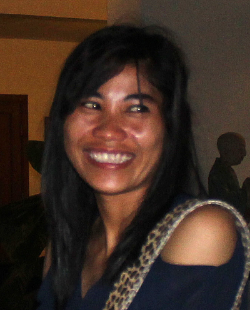
Ros Sarom, 2014
Sarom went on to study accounting at Asia Euro University, and today, is an administrator at a pharmaceuticals company. Her stunning smile tells of her success, and of the success of CASF in transforming lives.
History of CASF
-
Expanding Access to Secondary Education
CASF worked closely with communities in Kandal, Kompong Cham, Svayreang provinces to identify girls in need of support to continue their studies. These scholarships provided school books, supplies, uniforms, daily hygiene items, and even bicycles to make getting to school easier. Over the years, CASF saw community members become champions of their daughters' education, helping foster a culture in which girls' education was valued and encouraged.
-
Creating Pathways to Universities
In 2010, CASF expanded its educational support by offering university scholarships to girls in the program. Although CASF students wanted to continue their studies, university tuition was too high for most families, and many worried about their daughters' safety, as they would have to live on their own in the capital city of Phnom Penh. To address these needs, CASF scholarships covered tuition and a monthly stipend for food and living costs. CASF also rented an apartment in Phnom Penh to serve as a dormitory, providing students with a safe and supportive place to live while pursuing their studies. Our university students graduated from programs at the Royal University of Phnom Penh, Royal University of Law and Economics, and others.
-
Ensuring future-ready graduates
Significant progress has been made in girls' education since 2001, when CASF was founded. Today, CASF recognizes that the world is changing faster than ever. We are exploring new partnerships and opportunities that can provide the next generation of young women with the skills and resources they need to succeed.